How does our brain make sense of the sounds that we’re hearing? How can we use basic understanding of language in the brain to help people with communication disorders? These are questions that I address in my research.
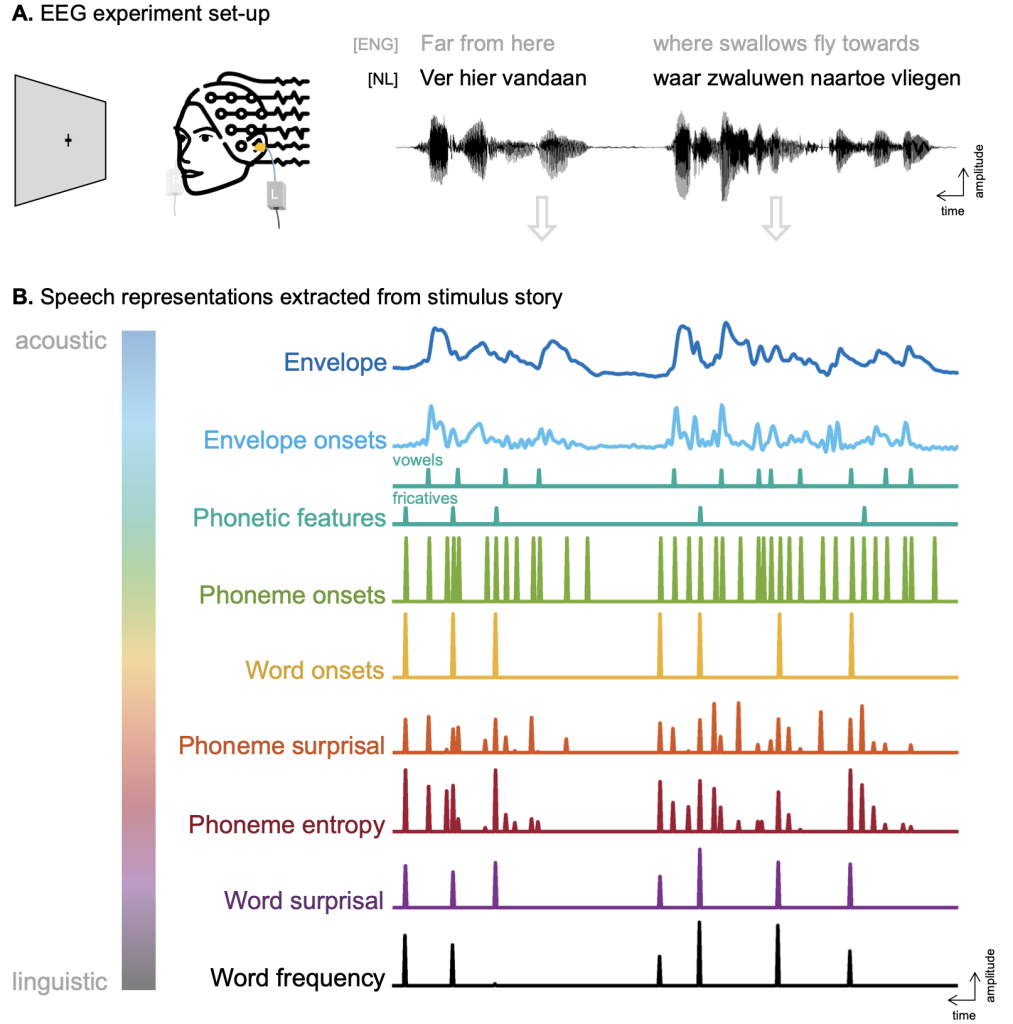
I approach them using natural language paradigms, EEG, intracranial EEG and OPM-MEG, computational methods and cognitive tests. I apply this set of methods in healthy adults as well as in people with diverse language phenotypes, such as at different time points of the lifespan (development and aging) or people with language disorders (for example aphasia, dyslexia, epilepsy).
Characterizing speech processing in these populations helps (1) understanding the life stage or disorder better and (2) identifying crucial mechanisms involved in language processing in the neurotypical brain.
This multidisciplinary line of research – drawing on patient populations, neuropsychological tests, cognitive neuroscience, linguistics and machine learning approaches – contributes to both theoretical understanding and practical applications, exploring the potential for developing diagnostic and therapeutic tools.
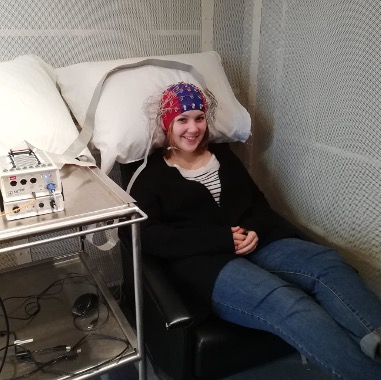
What an EEG experiment looks like: